

Hope is a Subtle Glutton
The color on the cruising cloud

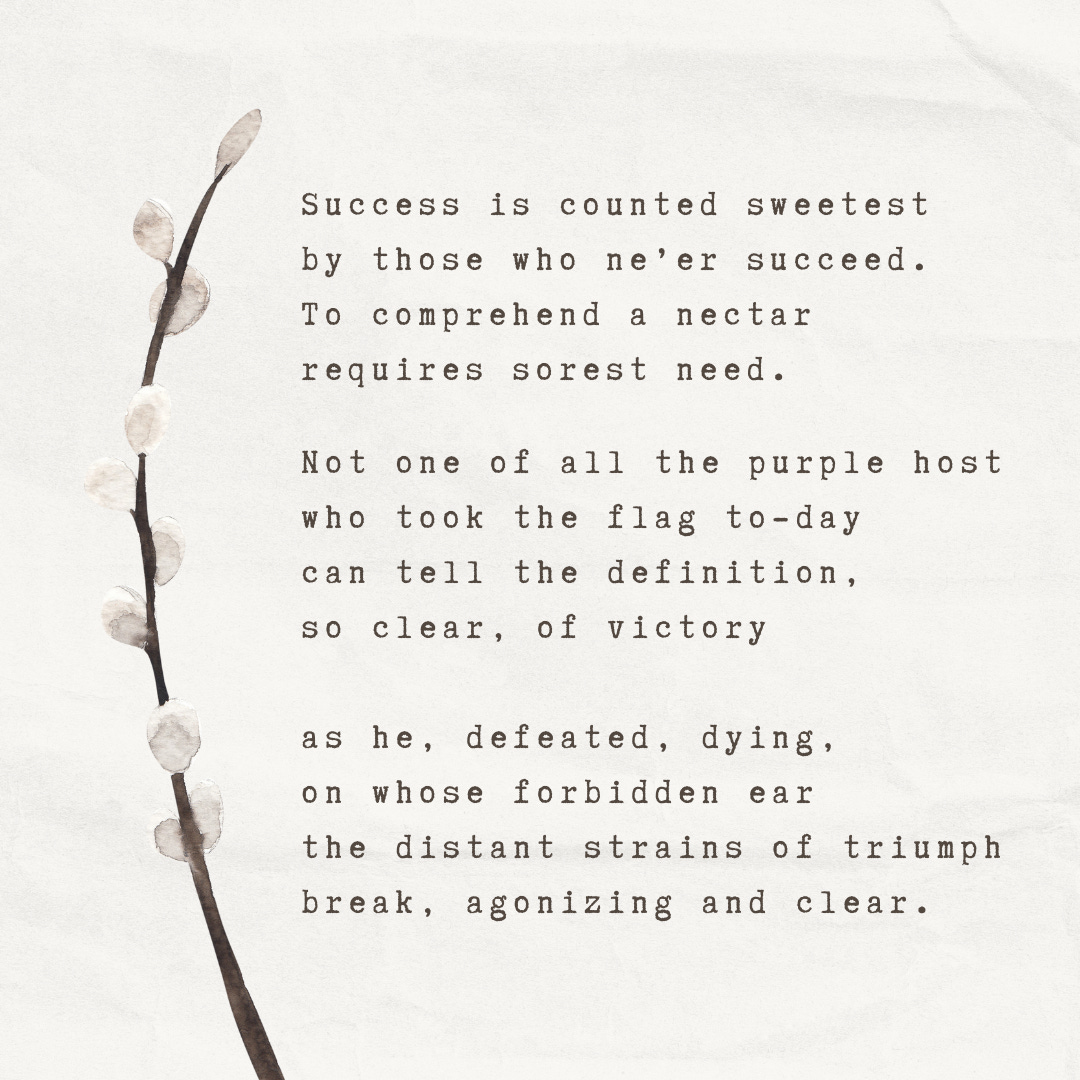
We begin today’s newsletter with Emily Dickinson’s poem Success.
She describes the feeling of being just out of reach of victory and imagining it a sweeter nectar than even the true victors would. It’s a poem about longing for what you don’t have and how that longing is more potent than the thing itself. It’s a poem about how the one who understands the sweetness of victory best is the one who’s never tasted it.
And it’s complimented by another of Dickinson’s poems:
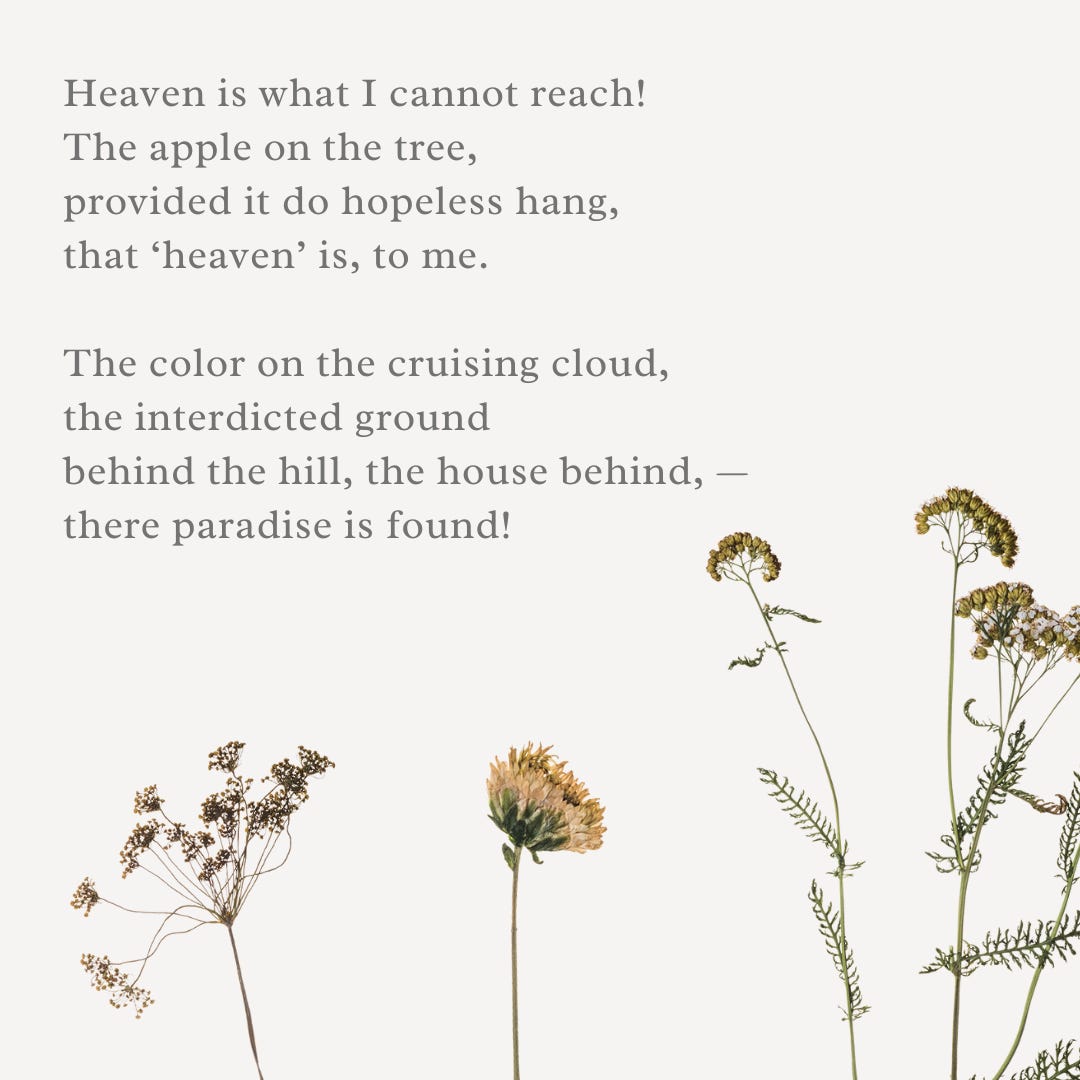
It seems Dickinson believed that things out of reach held power because of their inaccessibility. The faraway thing has more draw than the thing in our hands.

So far, she seems to be speaking mostly of success, of our insatiable need to have what we do not, but she extends this theme further, to that of hope.
To understand how, we will start with an early poem of Dickinson’s on the concept of hope, and then we will show a second poem, written later in her life, that seems to refute the first.
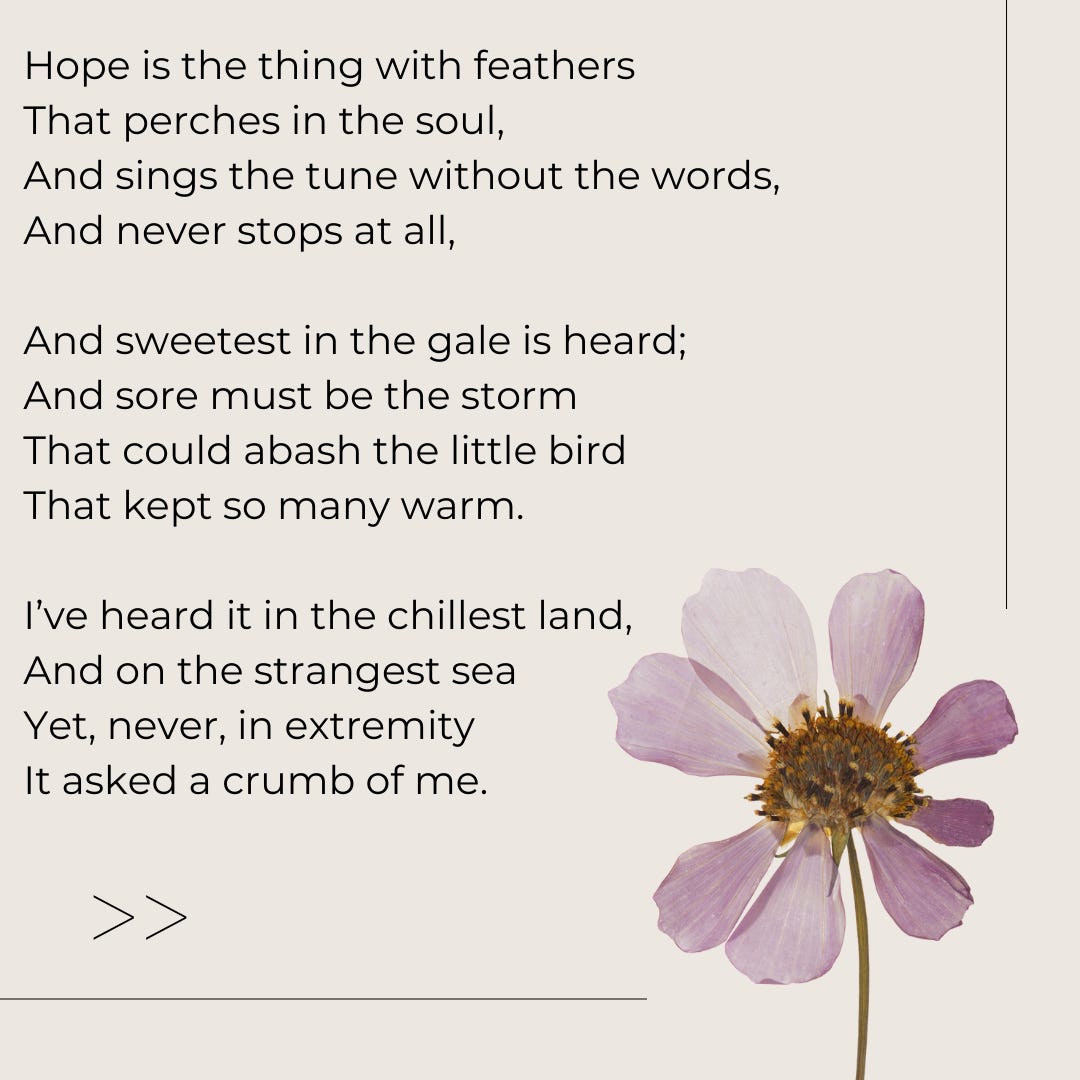
This is an uplifting poem. It tells us that in each of us there is a living, breathing thing called hope that stays steadfast through storm and tribulation and sings out over it all. More than that, this hope asks nothing in return. We owe it nothing, it expects nothing of us. It only endures.
But, later in Dickinson’s life, she wrote this poem:
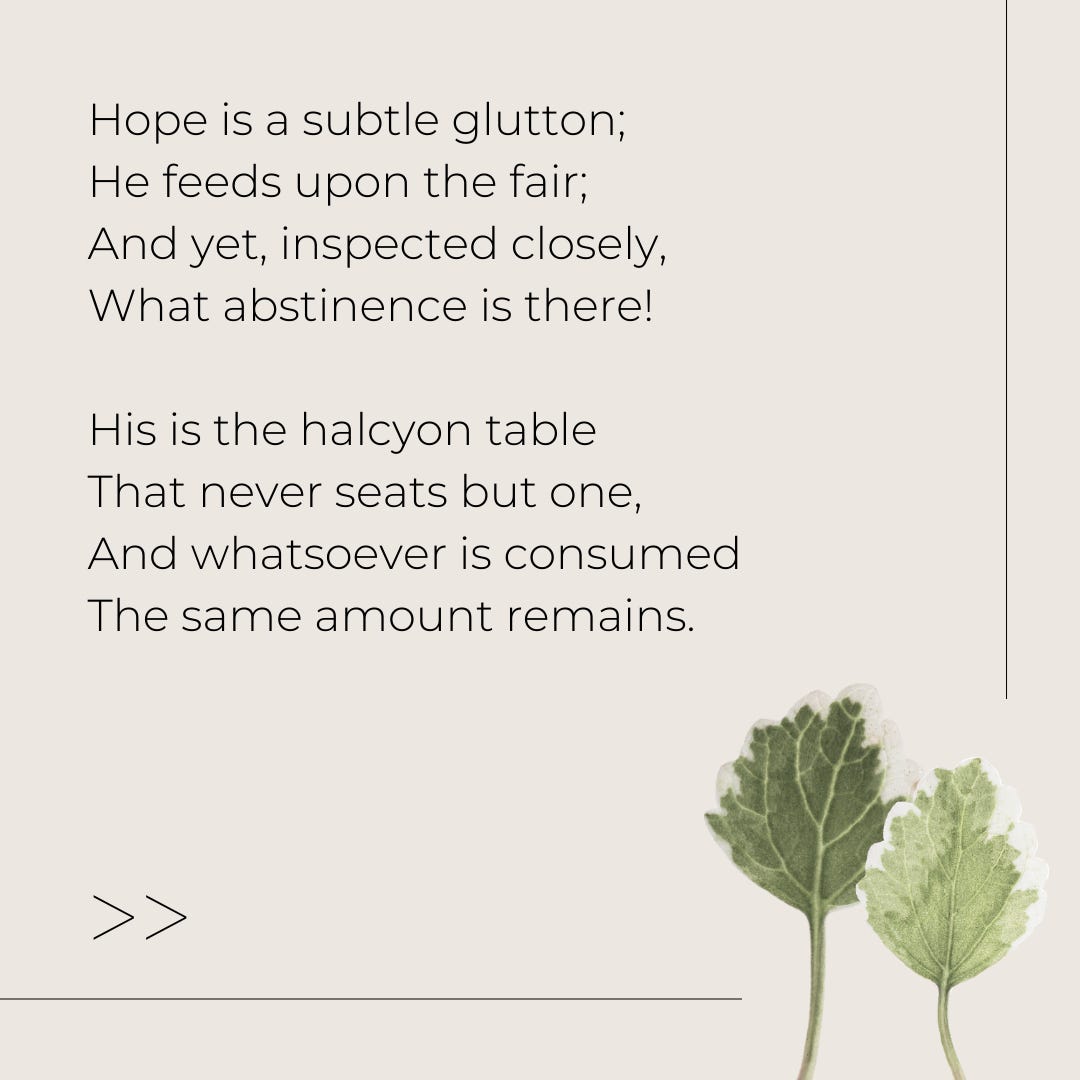
Describing hope as a “subtle glutton” is a drastic contrast from the idyllic bird of the previous poem. She now sees hope as greedy and never-satisfied. What changed and what is this poem trying to tell us?

She imagines hope sitting alone at a table, eating and eating, but no matter how much it eats, more remains.
There are several ways to read this poem, some darker than others, but I see it as a reference to her other works on success.
Whatever hope we have fulfilled, we always have more hope: “the same amount remains.”
There is always something else hoped for. We are not satisfied with what’s in our hands, we want, “the color on the cruising cloud.” We want the unreachable. We want what we don’t have.
In this context, hope could be used interchangeably with wish. We wish for something, and when that wish is fulfilled, we wish for something else. As we learned before, nothing shines so bright as something just out of reach. Nothing draws us in more than the thing someone else has that we don’t.
So we hope for more. And that hope is an insatiable beast that “feeds upon the fair.”

The line that throws this whole theory into question though, is “and yet, inspected closely, what abstinence is there!”
I’m not sure what to make of the line. It doesn’t fit cleanly into my reading of this set of poems. How does a glutton display abstinence? How can it be both at once?

Regardless of how you read these poems, it seems clear to me that Dickinson wrestled with success and hope — particularly the way those things glitter in the distance but dull as we draw near.
Emily Dickinson was captured by the desire for something out of reach, but also aware that the longing she felt was stronger than whatever emotions awaited her “behind the hill.”


applause. thank you for perfect timing
Hope is the silent letter of our longing pouring out the language of who we are. The secrets of a liquid whispered over the desert parts of our hearts. The secret is this, hope is not something that was ever intended to be held. Hope, like water, Emily Dickinson says, is something we learn from thrist.